Project overview
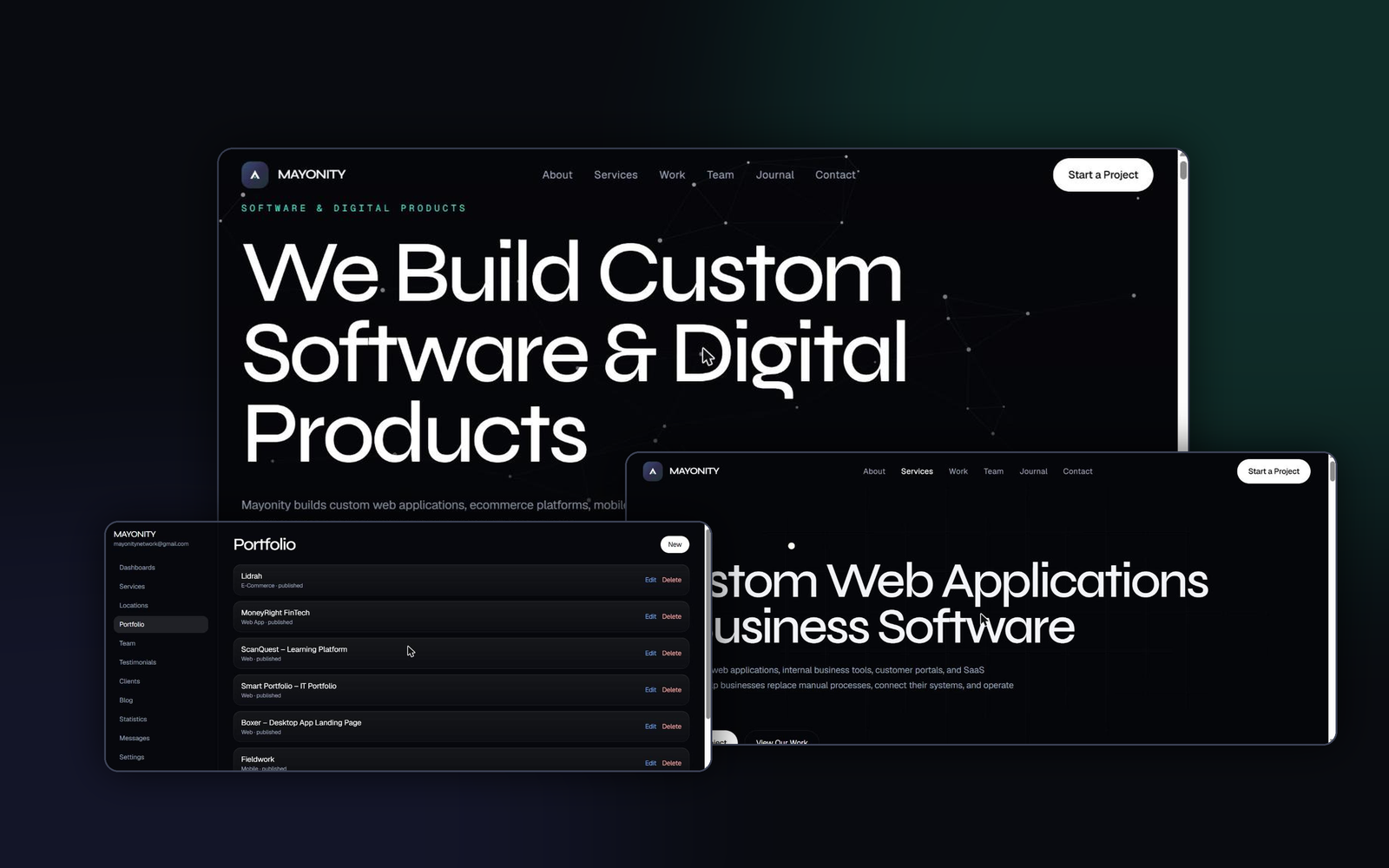
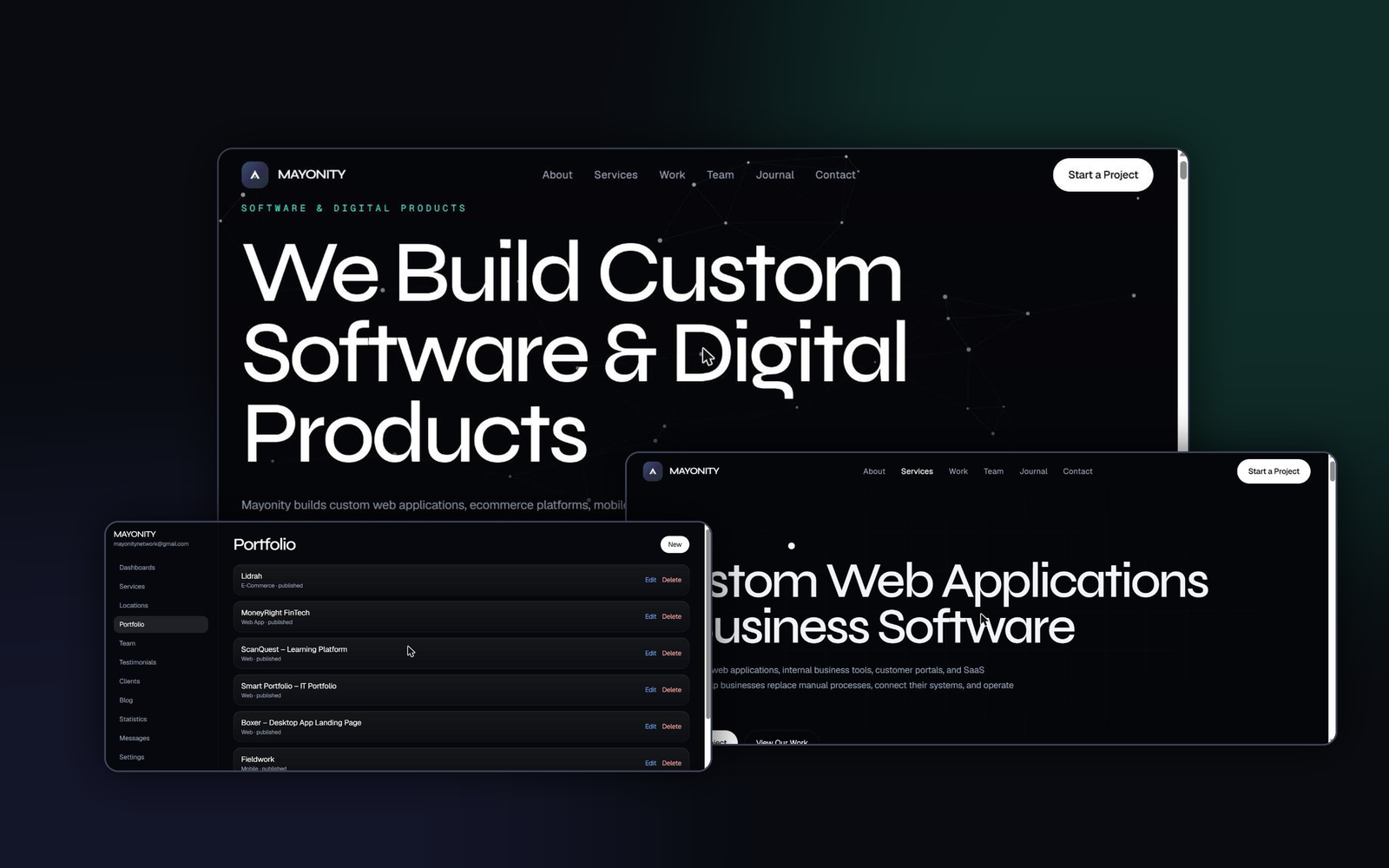
Mayonity.com is our own website, and we treated it the way we treat client work. Rather than a static brochure built once and left alone, we wanted a site our own team could run day to day: new service pages, case studies, country pages and articles added without opening a code editor or waiting on a developer. So we designed and built it ourselves on Next.js, with a custom admin panel behind it.
Challenge
Most agency websites have the same two problems. The content goes stale because every change needs a developer, and the pages are built to look good rather than to be found on Google.
We needed to solve both at once. The site had to be fast and search-friendly from the first page load, and everything on it, including services, projects, team members, articles and the FAQs on each page, had to be editable by non-developers. It also had to be ready to add new content types later without a rebuild.
Solution
We built the site on Next.js with server-side rendering, so the full text of every page is in the HTML before any JavaScript runs. That matters for search engines and for anyone on a slow connection.
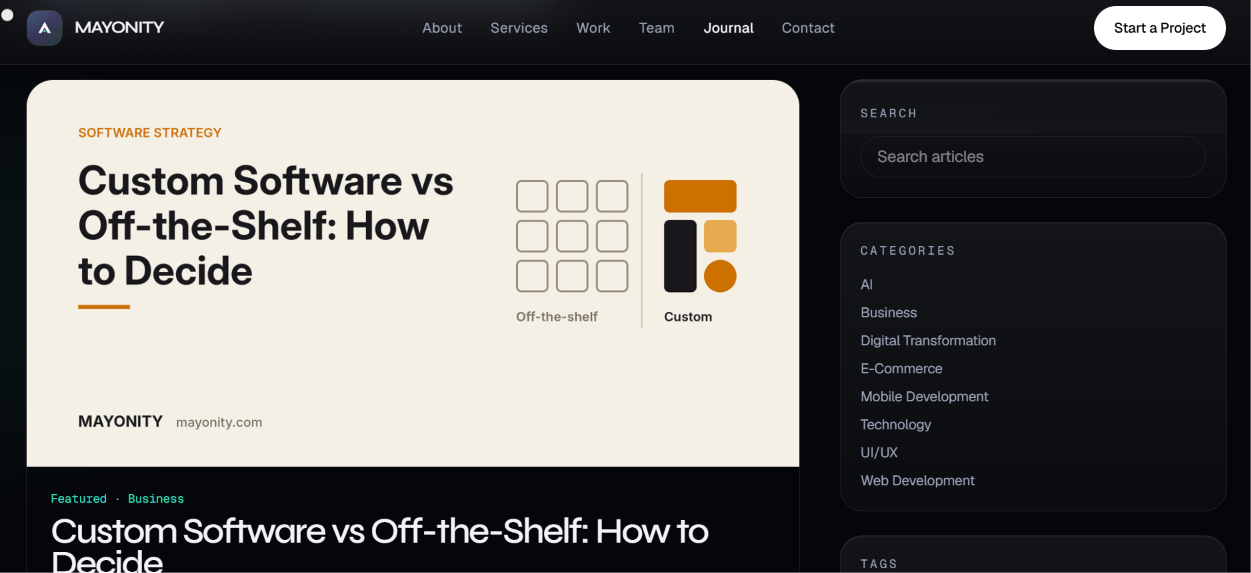
Behind it sits a custom admin panel we wrote ourselves, backed by MySQL. It controls services and their FAQs, portfolio case studies, country landing pages, blog posts with authors and categories, team profiles, testimonials, client logos, site statistics, enquiry messages and global settings. Each service, project, article and location carries its own SEO title and meta description, so pages can be tuned individually.
The search-engine groundwork is built in rather than bolted on: structured data for the organisation, breadcrumbs, services, articles and FAQs, a sitemap generated from the live database, Open Graph images for social sharing, and clean URLs with redirects when something moves.
Design
A dark, high-contrast interface with large display type and generous spacing, designed to feel like a product studio rather than a template. The layout adapts across desktop, tablet and mobile, and page structure follows a clear heading hierarchy so the content is readable to people and to search engines alike.
Technology
Next.js with the App Router handles routing and server rendering, React builds the interface, Tailwind CSS handles styling, and MySQL stores all content. The admin panel is custom-built rather than an off-the-shelf CMS, so it holds exactly the fields we need and nothing we do not. The site is deployed to cPanel hosting through an automated GitHub Actions pipeline.
Results
A production site our team updates daily without developer time.
Every page server-rendered, so content is visible to search engines on first load.
Structured data in place for organisation, breadcrumbs, services, articles and FAQs.
A sitemap that updates itself whenever content changes, submitted and read successfully by Google Search Console.
SEO fields on every service, project, article and location page.
A foundation we extend without rebuilding: country landing pages and per-service FAQs were both added after launch.